


 Rhonda Patrick, PhD
 Ania M. Jastreboff, MD, PhD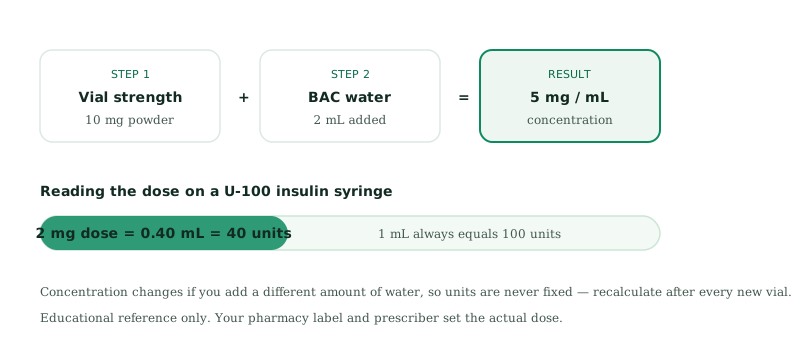
This retatrutide dosage calculator converts the three key numbers into a clear output: the peptide amount in your vial, the bacteriostatic water volume added, and the insulin units needed for the dose your provider ordered. Retatrutide is an experimental compounded peptide that is not FDA-approved not meant for weight loss or any other purpose, and it is obtainable in the US only through a licensed doctor and a compounding pharmacy. The tool below serves as an educational aid to help you understand the math after you have a valid prescription and a pharmacy label. It does not prescribe, diagnose, or suggest a dose.
- What it does: turns vial strength (mg) and bacteriostatic water (mL) into concentration, per-dose volume, and insulin units.
- Unit basis: a typical U-100 insulin syringe, where 1 mL corresponds to 100 units.
- Status: retatrutide is still under investigation and compounded, with no approved product label.
- Authority: your prescriber and the pharmacy label always take precedence over any number shown here.
Retatrutide reconstitution calculator
Type in your values and the results update live. This retatrutide reconstitution calculator presumes you are using a freeze-dried vial that you mix with bacteriostatic water before injection.
Concentration 5 mg/mL
Volume per dose 0.40 mL
Dose on insulin syringe 40 units
These results are for educational estimation only. They are not medical advice and do not supersede the directions from your doctor or the compounding pharmacy. The dose specified on your pharmacy label is the final authority. Do not alter your dose, titration schedule, or injection method based on this page.
Instructions for using this retatrutide dosing calculator
The retatrutide dosing calculator requires only the details already on your vial and pharmacy documents. Always follow the label; use the tool to double-check the volume you expect to draw.
Reading your three inputs
- Vial strength: the total mg of retatrutide in the vial, for instance, 5 mg, 10 mg, or 30 mg. This is the entire vial, not one dose.
- Bacteriostatic water: the mL of bacteriostatic water that you (or the pharmacy) add to dissolve the powder. Adding more water results in a less concentrated solution; less water makes it more concentrated. The amount of peptide stays the same.
- Desired dose: the mg your provider has prescribed for this shot, such as 0.5 mg at the start or 2 mg later during titration.
A worked example
For example, with a 10 mg vial and 2 mL of bacteriostatic water, the concentration is 10 mg divided by 2 mL, giving 5 mg/mL. If your prescribed dose is 2 mg, then the volume is 2 mg ÷ 5 mg/mL, which equals 0.4 mL. On a U-100 insulin syringe, 0.4 mL is 40 units. This matches the default values in the fields above, so you can modify one number at a time and see each result adjust.
Why the reconstitution math matters: mg vs mL vs units
Beginners in peptides often confuse these three measurements. Milligrams indicate the amount of drug. Milliliters indicate the liquid volume you draw. Units are just the markings on an insulin syringe. The retatrutide bac water calculator exists because these three are interconnected but not identical, and mixing them up is the most frequent cause of accidental over- or under-dosing.
How concentration is derived
Concentration is the foundation for all other calculations. It is the vial strength divided by the volume of bacteriostatic water used:
Concentration (mg/mL) = vial strength (mg) ÷ bacteriostatic water (mL)
Volume per dose (mL) = desired dose (mg) ÷ concentration (mg/mL)
Units = volume per dose (mL) × 100
Since units are simply volume × 100 on a U-100 syringe, once you know the volume in mL, you can read the syringe directly. A retatrutide peptide calculator that provides units in the result relieves you from doing this final mental step at the time of injection. For full instructions, refer to our guide on how to reconstitute retatrutide.
The same vial, two different reconstitution volumes
The volume of water you choose alters the units per dose, even though the mg remain the same. If you add 1 mL to a 10 mg vial, the concentration is 10 mg/mL, so a 2 mg dose is only 0.2 mL, or 20 units. If you add 2 mL to the same vial, the same 2 mg dose becomes 0.4 mL, or 40 units. Neither has more or less drug per dose; only the syringe reading changes. This highlights why you must reconstitute with the exact volume your pharmacy specifies.
Illustrative calculations for 5 mg, 10 mg, and 30 mg vials
These examples demonstrate how the retatrutide mixing calculator functions across the typical vial sizes encountered in compounded products. In every case, the dose you intend is what you input; the units shown are what you measure on the syringe.
| Vial strength | BAC water added | Concentration | Desired dose | Volume | Insulin units |
|---|---|---|---|---|---|
| 5 mg | 1 mL | 5 mg/mL | 1 mg | 0.20 mL | 20 units |
| 5 mg | 2 mL | 2.5 mg/mL | 1 mg | 0.40 mL | 40 units |
| 10 mg | 1 mL | 10 mg/mL | 2 mg | 0.20 mL | 20 units |
| 10 mg | 2 mL | 5 mg/mL | 2 mg | 0.40 mL | 40 units |
| 30 mg | 3 mL | 10 mg/mL | 4 mg | 0.40 mL | 40 units |
| 30 mg | 6 mL | 5 mg/mL | 4 mg | 0.80 mL | 80 units |
Note the consistent pattern: as concentration rises, the number of units needed for the same milligram dose decreases. A 30 mg vial does not correspond to a 30 mg dose. It represents a larger supply that you split into multiple shots according to your prescribed titration, which our dosage guide details extensively. Use this reference table solely to verify the tool, not to determine your own dosage.
Would you like a healthcare provider to assess if a compounded GLP-1 regimen is suitable for you? Begin with a brief eligibility questionnaire.
Get startedFrequent errors and tips for reading units
Typical mistakes when using the retatrutide dose calculator
- Assuming the entire vial is a single dose. A 10 mg vial contains multiple doses. Entering the whole vial as your intended dose is the most critical error.
- Altering the water volume without recalculating. If you reconstitute with a different amount of bacteriostatic water than indicated on your label, all unit measurements will shift. Recalculate with the retatrutide dosage calculator in units whenever the mixture changes.
- Confusing units with milliliters. On a U-100 syringe, 40 units and 0.4 mL are equivalent volumes, but only on a U-100 syringe. Verify your syringe is marked U-100.
- Rounding aggressively. Minor rounding on a concentrated solution can represent a notable proportion of a small dose. Measure to the closest marked unit and consult your pharmacy if uncertain.
- Using tap water or sterile water meant for irrigation. Reconstitution should be done with bacteriostatic water unless your pharmacy instructs otherwise.
Reading the syringe cleanly
Hold the syringe at eye level, push out air bubbles before reading the plunger, and align the top dark ring of the plunger with the target unit line. If your prescribed volume falls between two marks, do not estimate. Inquire with the pharmacy whether a different reconstitution volume would align your dose with a whole unit line. When you're ready to inject, our guide on how to inject retatrutide discusses site rotation and technique.
Frequently asked questions
What volume of bacteriostatic water is needed for a 5 mg retatrutide vial?
There is no specific required amount. Many choose 1 mL or 2 mL of bacteriostatic water for a 5 mg vial, yielding 5 mg/mL or 2.5 mg/mL, respectively. The answer to "how much bac water for 5mg retatrutide calculator" depends on the concentration your pharmacy specifies. Follow your label, then use the tool above to verify the resulting units.
Is this retatrutide calculator considered medical advice?
No. It is an educational estimation that performs arithmetic on the numbers you input. It cannot account for your prescription, medical history, or pharmacy recommendations. Your prescribing clinician and the pharmacy label are the definitive sources for your actual dose.
Why does the unit answer change when I modify the water amount?
Because units reflect the volume drawn, which depends on concentration. Adding more bacteriostatic water dilutes the solution, meaning the same milligram dose occupies more milliliters and therefore more units. The milligrams of medication per dose remain unchanged.
Does this calculator work for a 30 mg vial?
Yes. Input 30 as the vial strength and the volume of bacteriostatic water your pharmacy specifies. The retatrutide dosage calculator for weight loss math is identical regardless of vial size; a larger vial simply accommodates more injections.
Is retatrutide FDA-approved?
No. Retatrutide is a compound still under investigation and not yet approved by the FDA. In the US, it can only be used through a licensed prescriber and a compounding pharmacy. Always discuss the risks, benefits, and other options with a qualified healthcare provider.
What should I do if my dose isn't exactly on a syringe line?
Don't guess or estimate a partial mark. Instead, ask your pharmacy if they can adjust the concentration so your dose lines up with a clear mark, making it easier and more accurate to measure.
Important safety note
Retatrutide-Peptide.org provides this page for informational purposes only. Retatrutide is not FDA-approved and is only available as a compounded, investigational product prescribed by a licensed clinician who is familiar with your health history. If you experience serious reactions like persistent nausea, vomiting, signs of pancreatitis, allergies, or low blood sugar symptoms, seek medical help right away. Never change your dose based on an online tool. If there's a discrepancy between this information and your pharmacy label, follow the label and consult your provider or pharmacist.