


 Rhonda Patrick, PhD
 Fatima Cody Stanford, MD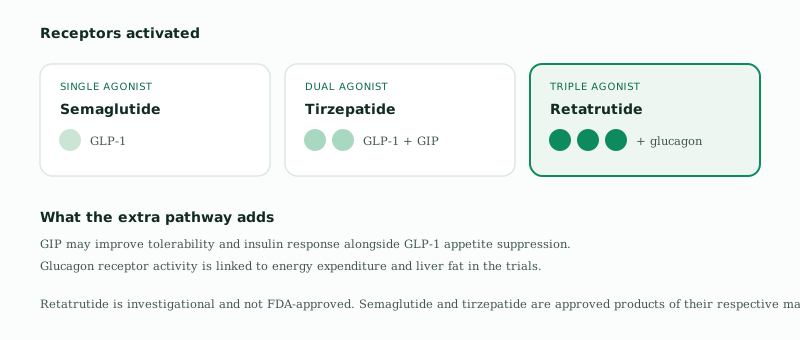
The retatrutide vs tirzepatide comparison is among the most frequently asked questions in the incretin weight-loss field, and rightly so: these two molecules share origins but differ in a way that could influence weight loss results. Retatrutide is a not-yet-approved compounded peptide that not FDA-approved whereas tirzepatide is a fully FDA-approved medication marketed by Eli Lilly as Mounjaro® (for type 2 diabetes) and Zepbound® (for chronic weight management). This page covers mechanism, clinical data, dosing, side effects, and cost differences in an objective, evidence-based manner to help you have a more informed discussion with a qualified healthcare professional.
Retatrutide remains investigational and is only available as a compounded product through a licensed provider and pharmacy. The FDA has not approved it for weight loss or any other indication, and its long-term safety and effectiveness are still under investigation. This content is not medical advice and does not guarantee outcomes.
Retatrutide vs tirzepatide: the fundamental difference in mechanism
The most important distinction between these two peptides lies in the number of gut-hormone receptors they engage. This underpins every other comparison that follows.
Tirzepatide: a dual GLP-1/GIP agonist
Tirzepatide stimulates two receptors: GLP-1 (glucagon-like peptide-1) and GIP (glucose-dependent insulinotropic polypeptide). Together, they suppress appetite, slow stomach emptying, and enhance blood sugar regulation. This dual action is what positioned tirzepatide, as Mounjaro® and Zepbound®, as a notable advance over single-agonist drugs.
Retatrutide: a triple agonist that adds glucagon
Retatrutide hits the same two receptors and also activates a third: the glucagon receptor. The glucagon component is believed to boost energy expenditure and affect liver fat, in addition to the effects appetite suppression from the other two receptors. This extra pathway underpins the theory that some early data show greater impact, though a broader mechanism does not necessarily mean better results for every person.
Mechanism at a glance
- Tirzepatide = dual agonist (GLP-1 + GIP), FDA-approved.
- Retatrutide = triple agonist (GLP-1 + GIP + glucagon), investigational.
- The glucagon receptor is what sets retatrutide apart from tirzepatide.
- Both are given as once-weekly subcutaneous injections in research and compounded contexts.
Side-by-side comparison table
The table below highlights the practical differences. For a wider view of how retatrutide compares with earlier-generation options, see our retatrutide vs semaglutide breakdown.
| Factor | Retatrutide | Tirzepatide (Mounjaro®/Zepbound®) |
|---|---|---|
| Mechanism | Triple agonist | Dual agonist |
| Receptors | GLP-1, GIP, glucagon | GLP-1, GIP |
| Approval status | Investigational; available only as compounded; not FDA-approved | FDA-approved (Lilly trademark) |
| Weight loss in trials | Approximately 24% mean weight loss at the highest dose in phase 2 (48 weeks) | Approximately 21% mean weight loss at the highest dose in SURMOUNT-1 (72 weeks) |
| Dosing frequency | Once weekly (subcutaneous) | Once weekly (subcutaneous) |
| Common side effects | Nausea, vomiting, diarrhea, constipation, and decreased appetite | Nausea, vomiting, diarrhea, constipation, and decreased appetite |
| Cost / coverage | Out-of-pocket; not covered by insurance because it is investigational | Brand-name pricing; may be covered by insurance if criteria are met |
The trial data originate from separate studies with different cohorts and durations, so direct percentage comparisons are not valid. No head-to-head study of retatrutide versus tirzepatide for weight reduction has been conducted.
Retatrutide versus tirzepatide for weight loss: insights from clinical trials
When individuals inquire whether retatrutide surpasses tirzepatide, they typically refer to the weight loss statistics. It is crucial to interpret these numbers with caution.
The headline figures
In a phase 2 trial, the highest retatrutide dose resulted in an average weight reduction of roughly 24% over 48 weeks, with no clear plateau in the trajectory. Conversely, tirzepatide in the more extensive and longer SURMOUNT-1 phase 3 study achieved about a 21% average decrease at its maximum dose over 72 weeks. On paper, the triple agonist appears more potent, fueling the interest in comparing tirzepatide and retatrutide.
Why the comparison is not straightforward
These were independent trials with varying designs, sample sizes, durations, and participant characteristics. Phase 2 outcomes often seem promising but may change once larger phase 3 results are released. Individual responses vary considerably regardless of the compound used, and averages do not predict personal experiences. For more details on typical outcomes and timelines, refer to our how results unfold week by week page.
Bottom line on efficacy
Preliminary evidence hints that retatrutide could lead to greater average weight loss, yet tirzepatide possesses a much more extensive, long-term, FDA-reviewed evidence base. A higher potential on paper does not equate to being the right choice for you.
Transitioning from tirzepatide to retatrutide
Many individuals exploring the comparison of retatrutide with Mounjaro or Zepbound are currently using tirzepatide and contemplating a switch. The straightforward answer to how to transition from tirzepatide to retatrutide is that only a licensed healthcare professional familiar with your medical background can devise a safe plan.
Key factors that providers evaluate
- Current dose and tolerance. Your current position on the tirzepatide titration schedule influences the initial dose of any new peptide.
- Timing of the transition. Providers typically coordinate the switch to align with the weekly dosing regimen utilized in clinical trials rather than overlapping doses.
- Re-titration. Given that retatrutide introduces a glucagon mechanism, providers generally initiate at a low dose and gradually increase, rather than matching the previous milligram-for-milligram.
- Monitoring. Blood sugar, blood pressure, heart rate, and gastrointestinal tolerance are closely monitored during the initial weeks.
- Goals and history. Prior side effects, weight loss plateaus, and concurrent medical conditions all influence the individualized plan.
The aforementioned steps are general examples, not a dosing protocol. There is no universal conversion chart, and self-directed switching may be unsafe. A provider must personalize any titration. For an overview of typical weekly escalation, see our general titration and switching guide.
Can retatrutide and tirzepatide be used together?
Some online searches inquire about combining retatrutide and tirzepatide to enhance effects. Generally, these two incretin medications are not used together. Both influence overlapping GLP-1 and GIP pathways, so concurrent use may amplify side effects, especially nausea, vomiting, dehydration, and hypoglycemia risk, without clear additional benefits.
Combining two incretin agonists is not a recognized weight loss approach and should never be self-administered. Any decision to overlap or combine these medications must be directed and supervised by a healthcare provider. For most, the guidance is simple: use one at a time.
Comparing retatrutide and tirzepatide: cost considerations and suitability
The cost picture
Regarding cost, retatrutide and tirzepatide have distinct economic profiles. Tirzepatide, as a branded Lilly product, has brand-name pricing and may receive partial insurance coverage when strict clinical criteria are fulfilled. Retatrutide, as an investigational compounded substance, is paid out-of-pocket and not covered by insurance. Prices vary by pharmacy, dose, and program. See our detailed cost comparison for current ranges.
Which molecule might suit which individual
Neither is inherently superior. A dual agonist with a substantial FDA-reviewed evidence base and possible insurance coverage may appeal to those prioritizing an approved, well-studied option. An investigational triple agonist may interest those seeking a potentially more potent effect. Medical history, tolerability, goals, and budget are far more important than the headline percentages.
Consult a healthcare provider first
Only a licensed clinician can determine whether either medication is suitable, safe, and lawful for your situation. This page is for educational purposes and does not replace that consultation.
Frequently asked questions
Does retatrutide outperform tirzepatide when it comes to weight loss?
Early phase 2 data hint that retatrutide could bring about greater average weight loss (about 24% vs roughly 21% for tirzepatide across separate studies), but these trials aren't directly comparable and retatrutide is still under investigation. Which one is 'better' depends on your individual health situation, and only a healthcare provider can give you proper guidance.
What sets tirzepatide and retatrutide apart most significantly?
Tirzepatide is a dual GLP-1/GIP agonist that has received FDA approval. Retatrutide works on a third receptor—the glucagon receptor—making it a triple agonist, but it remains investigational and is produced as a compounded product rather than being approved.
Is there a retatrutide vs tirzepatide dosage chart that I can refer to?
There is no universally safe chart, and we don't offer personalized conversion tables. Both medications are injected once a week and need gradual dose escalation, but the precise plan has to be established and tracked by a licensed healthcare provider, who will consider your medical background.
Is it possible to combine retatrutide and tirzepatide?
Typically, no. Since they affect similar biological pathways, using them together could heighten side effects without any proven extra benefit. Any choice to combine or overlap these incretin-based drugs must be guided by a provider.
What's the process for switching from tirzepatide to retatrutide?
Making the switch should be coordinated by a healthcare professional, who will usually time the change around your weekly injection schedule and begin retatrutide at a low dose, gradually increasing it rather than using the dose you were on with tirzepatide. You should not try to switch on your own.
Are Mounjaro and Zepbound identical to tirzepatide?
Yes. Mounjaro® and Zepbound® are Eli Lilly's brand names for tirzepatide, with FDA approval for type 2 diabetes and chronic weight management, respectively. Both names are trademarks owned by Lilly.
Retatrutide-Peptide.org offers educational content and connects you with licensed providers for care. Retatrutide is an investigational, compounded medication, while tirzepatide (Mounjaro® Zepbound®) is FDA-approved and a trademark of Eli Lilly and Company. The information here is not medical advice, and outcomes are not assured. Interested in discussing your options with a clinician? Here's how to begin with an online consultation.