


 Rhonda Patrick, PhD
 Ania M. Jastreboff, MD, PhD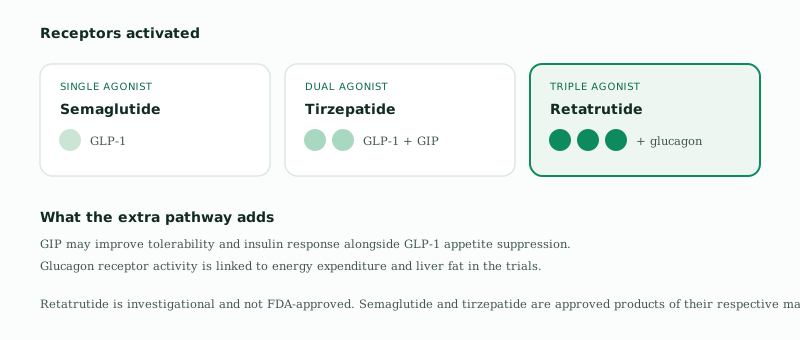
The retatrutide vs semaglutide comparison is a frequent topic because the two peptides are at different development stages, yet people often put them head-to-head. Semaglutide is an FDA-approved drug marketed by Novo Nordisk under the brand names Ozempic®, Wegovy®, and Rybelsus®. Retatrutide is an experimental compound not yet approved by the FDA for any purpose; when accessed via telehealth, it is produced by compounding pharmacies. This page outlines their molecular differences, early trial data, and how licensed clinicians might approach switching or combining them. It is for educational purposes and is not a substitute for personalized medical guidance.
- Retatrutide: experimental triple agonist (GLP-1 / GIP / glucagon); not FDA-approved; compounded.
- Semaglutide: selective GLP-1 receptor agonist; FDA-approved as Ozempic®, Wegovy®, Rybelsus® (Novo Nordisk trademarks).
- Both are administered once weekly via injection for weight management (Rybelsus® is an oral daily semaglutide tablet).
- Use of any investigational peptide should occur under the supervision of a licensed healthcare provider.
Functional differences between retatrutide and semaglutide
The primary distinction between semaglutide and retatrutide lies in the number of hormonal pathways each activates. Semaglutide is a single-target drug: it mimics GLP-1, a gut hormone that delays gastric emptying, reduces appetite signals in the brain, and enhances insulin response. This well-understood mechanism is the foundation of its approved uses.
Retatrutide is engineered as a triple agonistIt activates three receptors simultaneously: GLP-1, GIP, and glucagon. The additional glucagon activity is particularly notable, as it may increase energy expenditure and affect fat metabolism, at least in theory. Researchers are still investigating whether this triple-pathway approach leads to sustained, safe benefits in humans. For a comparison of other multi-target peptides, refer to our page on retatrutide vs tirzepatide and for the broader context of other peptides and GLP-1s.
Is retatrutide identical to Ozempic?
No. A common query is "is retatrutide the same as Ozempic," and the answer is that they are distinct molecules with different mechanisms. Ozempic® is a semaglutide brand, a single GLP-1 agonist approved for type 2 diabetes (while Wegovy® is approved for weight management). Retatrutide is a separate experimental triple agonist. The difference between Ozempic and retatrutide is not merely branding; it involves the underlying pharmacology and regulatory status.
Retatrutide vs Ozempic and Wegovy: a direct comparison
The following table compares retatrutide with ozempic and retatrutide with wegovy on the factors people inquire about most. Clinical trial numbers are approximate ranges from published studies and should be viewed as illustrative, not as a promise of individual outcomes.
| Factor | Retatrutide | Semaglutide (Ozempic® / Wegovy® / Rybelsus®) |
|---|---|---|
| Mechanism | Triple agonist | Single agonist |
| Receptors | GLP-1, GIP, glucagon | GLP-1 only |
| Approval status | Investigational; not FDA-approved; compounded | FDA-approved (Novo Nordisk trademarks) |
| Trial weight loss | Approximately 24% in a phase 2 trial (highest dose, about 48 weeks) | Approximately 15% in the STEP program at the weight-management dose |
| Dosing frequency | Once weekly (subcutaneous) in clinical trials | Once weekly injection; Rybelsus® is a daily oral tablet |
| Common side effects | Nausea, vomiting, diarrhea, constipation, reduced appetite; long-term safety not yet established | Nausea, vomiting, diarrhea, constipation; well-established safety profile |
| Cost / insurance | Usually self-pay (compounded); not covered by insurance as it is investigational | May be covered by insurance; brand price varies significantly without coverage |
The roughly 24% phase 2 result for retatrutide and the about 15% STEP result for semaglutide originate from separate trials with different designs, durations, and participant groups. These are not directly comparable, and specific outcomes should not be anticipated. Retatrutide's long-term safety and effectiveness are still being evaluated.
Retatrutide versus semaglutide for weight reduction: what the evidence suggests
In theory, retatrutide's phase 2 weight-loss outcomes appeared greater than the semaglutide numbers often referenced from the STEP studies. However, whether retatrutide surpasses semaglutide remains unresolved. Semaglutide has extensive real-world evidence, cardiovascular outcome trials, and regulatory approval. Retatrutide shows early promise but also unknowns that only larger and longer studies can address. For practical dosing structures, see our summary of milligram-per-week dosing and typical results.
Transitioning from semaglutide to retatrutide
Individuals currently on a GLP-1 sometimes inquire about switching from semaglutide to retatrutide. Since retatrutide is investigational, there is no standardized, FDA-endorsed conversion between the two, nor a universal dose chart. Any switch should be planned and overseen by a licensed clinician familiar with your medical history.
How a clinician-guided transition is typically handled
- Evaluate your current semaglutide dose, tolerance, and the reason for considering a switch.
- Talk about the fact that retatrutide is investigational and compounded, including the uncertainties.
- In trials, dosing started low and increased on a predetermined schedule.
- Watch for gastrointestinal and other adverse effects, modifying treatment under medical guidance.
- Evaluate progress and safety at regular intervals.
This is a broad overview, not personal dosing advice. A clinician must tailor the approach.
Is it possible to combine retatrutide and semaglutide?
The idea of using retatrutide and semaglutide together is raised, but combining two overlapping GLP-1 receptor agonists is generally avoided. Both affect the GLP-1 pathway, so stacking them may amplify side effects like nausea without clear evidence of benefit. This decision rests solely with a licensed clinician, and typically only one agent is used at a time rather than both.
Who might be suited to each option
Those who may prefer semaglutide
Individuals wanting an FDA-approved medication with a proven safety profile, potential insurance coverage, and, in the case of Rybelsus®, an oral version may find semaglutide more appropriate to discuss with their doctor.
People curious about retatrutide
Those interested in a newer, multi-pathway experimental peptide, who recognize it is not FDA-approved and is compounded, might bring up retatrutide with a clinician who can assess the risks and benefits for their specific case.
Frequently asked questions
Frequently asked questions about semaglutide vs retatrutide
What is the primary difference between semaglutide and retatrutide?
Semaglutide is a single GLP-1 receptor agonist and has FDA approval (as Ozempic®, Wegovy®, and Rybelsus®). Retatrutide is an investigational triple agonist that also targets GIP and glucagon receptors and is not FDA-approved.
Is retatrutide the same as Ozempic?
No. Ozempic® is a brand name for semaglutide, a single-pathway GLP-1 drug. Retatrutide is a distinct, investigational molecule with a triple-agonist mechanism.
Is retatrutide superior to semaglutide?
Early phase 2 data for retatrutide showed greater average weight loss than commonly cited semaglutide figures, but these are not head-to-head studies. Semaglutide has established long-term data and approval, while retatrutide's safety and efficacy are still under investigation.
Is it possible to transition from semaglutide to retatrutide?
Solely with the guidance of a qualified healthcare provider. There is no standard equivalent dose, and any switch must be tailored to the individual and closely watched.
Is it safe to use retatrutide and semaglutide at the same time?
Typically, no. Since both work through the GLP-1 pathway, using them together can heighten side effects without additional benefit. This should be determined by a licensed medical professional.
Does health insurance pay for retatrutide the same way it does for semaglutide?
As retatrutide is still being studied and is compounded, it is usually an out-of-pocket expense, not covered by insurance. Semaglutide may be covered depending on your specific plan and medical condition.
Important safety information
Retatrutide is an experimental compound not yet cleared by the FDA for weight management or any other purpose, and data on its long-term safety are scarce. Semaglutide has FDA approval; Ozempic®, Wegovy®, and Rybelsus® are registered trademarks of Novo Nordisk, and Retatrutide-Peptide.org has no affiliation with or endorsement from Novo Nordisk. This information is meant for educational purposes only and should not replace professional medical advice. Never begin, stop, mix, or alter any medication without first consulting a licensed healthcare professional who can review your personal health background.