


 Rhonda Patrick, PhD
 Fatima Cody Stanford, MD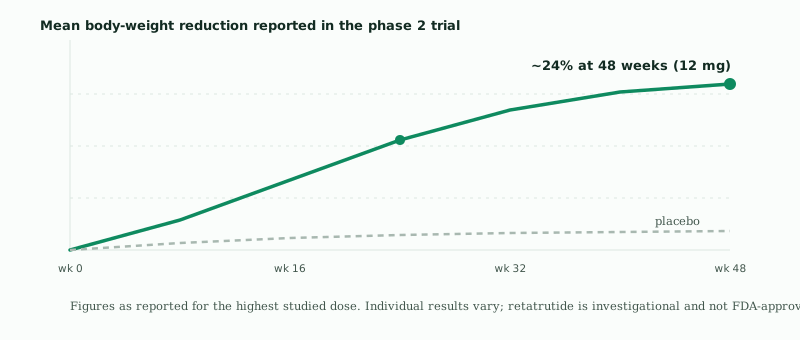
Those looking up retatrutide results generally want one answer: a realistic sense of how much weight this investigational peptide might help them lose, and how soon. Retatrutide is an experimental, compounded triple-agonist medication that some telehealth providers offer under clinician guidance. It is not FDA-approved for weight management or any other indication, and the figures below come from preliminary research, not guaranteed outcomes. Personal results differ widely, and this page serves educational purposes, not a guarantee of your individual experience.
Retatrutide remains investigational and is available only through a licensed provider as a compounded product. It has not received FDA approval. Nothing here constitutes medical advice, and no outcome is assured. Always consult a qualified clinician about your complete history and any medications before beginning.
- Average reported body-weight reduction: up to roughly 24% at 48 weeks (highest dose, phase 2, as documented)
- Approximate half-life: about 6 days, allowing once-weekly dosing
- Elimination period: about 5 half-lives (around 30 days) after the final dose
- Mechanism: acts on three receptors (GLP-1, GIP, and glucagon)
How does retatrutide promote weight loss?
To grasp retatrutide's results, it's useful to grasp its design. Unlike earlier medications that target one or two gut hormone pathways, retatrutide is a single molecule reported to activate three receptors at once: GLP-1, GIP, and glucagon. This 'triple agonist' mechanism is why researchers have been investigating it, and it's central to the pharmacology behind it.
The triple-agonist mechanism
The GLP-1 and GIP effects are thought to curb appetite, slow stomach emptying, and enhance fullness after meals, so people often consume less without constant effort. The glucagon component sets it apart: glucagon-receptor activation may boost energy expenditure and support fat metabolism. In theory, this combination pairs reduced caloric intake with a slight increase in calories burned.
Does retatrutide specifically reduce fat or also muscle?
A typical concern is whether the weight lost comes from fat or lean tissue. Any swift weight loss, regardless of method, can involve some muscle loss. The glucagon pathway is a reason researchers are exploring retatrutide's possible fat-specific effects, but this is still under investigation and not yet established. Sufficient protein intake and resistance training are widely recommended to preserve muscle during weight loss, regardless of medication use. Discuss body-composition goals and the possible benefits with a qualified clinician.
Retatrutide clinical trials results
The most frequently referenced retatrutide weight-loss outcomes stem from a phase 2 randomized study in adults with obesity. As reported, those on the highest weekly 12 mg dose achieved an average body-weight reduction of nearly 24% at 48 weeks, with lower doses yielding smaller average losses. These figures are averages from a controlled research setting and remain early-stage; more extensive, longer phase 3 trials are needed to validate both effectiveness and long-term safety.
Study figures represent group averages under research conditions, including medical supervision and gradual dose adjustments. They are presented as published evidence, not as a prediction for you. Your outcome may be higher, lower, or negligible, as individual responses vary.
How to responsibly interpret trial data
A 'mean' reduction indicates some participants lost more and others considerably less. Averages also reflect those who tolerated the drug well enough to continue. When encountering a headline percentage, view it as a best-case under perfect, supervised conditions, not a benchmark. This perspective is important when reading patient before-and-after reviews accounts, which are anecdotal and not a substitute for clinical data.
Retatrutide weight-loss timeline: what to expect week by week
There is no fixed schedule, but the table below outlines a typical, illustrative pattern of how a supervised regimen is often structured and what some individuals may notice. It's meant only as an example. Providers increase the dose gradually to enhance tolerability, so early weeks focus on adjustment rather than rapid change. Individual outcomes differ, and some may see little effect until later or experience an earlier plateau.
| Timeframe | Typical focus | What some users report (varies) |
|---|---|---|
| Weeks 1-4 | Lowest initial dose; body adjusting | Feel less hungry and take smaller servings; little or no change on the scale yet; possible early stomach discomfort. |
| Weeks 5-8 | Increase the dose for the first time following the clinician's instructions. | Feel fuller more often and earlier signs of gradual weight change may show up. |
| Weeks 9-16 | Continue gradually increasing the dose towards the target level. | Many observe a more obvious and steady weekly decrease; daily routines begin to stabilize. |
| Months 4-6 | Are near or have reached the target dose. | Frequently the most apparent combined results; a temporary plateau may occur for some. |
| Months 7-12 | Maintenance dosage alongside lifestyle guidance. | For some, slower and continued change; focus moves to preserving outcomes. |
Weekly weight loss linked to retatrutide therapy.
A common query is whether a predictable weekly number exists. Practically, weekly variations are inconsistent: minimal initially, more rapid during the middle titration phase, and tapering as the body gets used to it. Setting expectations on a specific weekly figure usually leads to frustration. A gradual, sustainable pace deemed safe by a medical expert is more meaningful than the reading from any single week, because that can fluctuate due to water, salt, and hormonal changes. Only your clinician determines and adjusts your weight-loss dose.
What is the onset time and duration before effects of retatrutide become noticeable?
Two frequently asked questions come up: how soon does retatrutide take effect, and how long before it starts working. These are distinct. Effects on appetite may be noticed fairly quickly, sometimes in the first couple of weeks, because the drug acts on appetite centers soon after dosing starts. Visible changes in weight, however, typically lag and become more apparent within the first two to four months as the dose is increased.
How much time does retatrutide remain in the system?
Retatrutide's estimated half-life is about 6 days, which is why it is designed for once-a-week administration. As a general guideline, a medication is mostly eliminated after roughly five half-lives, so retatrutide might take around 30 days to be mostly cleared after the last dose. This is an estimate; the exact duration depends on individual factors, and only a qualified medical provider can guide timing regarding procedures, pregnancy considerations, or other drugs.
Why is my body not losing weight on retatrutide?
Experiencing a weight plateau or a low response is common and doesn't automatically mean the treatment is ineffective. Weight loss is rarely a straight line, and various regular factors can hide progress. Below are points to discuss with a qualified provider before making any conclusions.
What to evaluate with a medical professional
- Dose and titration stage: Early low doses are not expected to cause significant loss; you may still be in the early stages.
- Adherence and timing: Skipping doses or inconsistent weekly use weakens the effect.
- Calorie and protein intake: Reduced appetite only helps if it leads to a sustained calorie deficit; drinks with calories and growing portion sizes can add up.
- Sleep and stress: Inadequate sleep and high stress can slow down progress.
- Fluctuations from water, sodium, and the menstrual cycle: These can hide fat loss on the scale for days or weeks.
- Medical factors: Thyroid problems, other medications, and certain medical conditions can impact outcomes and need clinical review.
When a weight plateau typically occurs
As weight decreases, the body adapts and metabolism changes, so a brief plateau after significant early loss is common. A qualified clinician may suggest adjustments, but you should never change your dose on your own to try to speed results. Also, review any known risks and contraindications because how well you tolerate the medication can affect whether the plan can be continued as intended.
Realistic expectations and the impact of lifestyle
Retatrutide for weight loss, when deemed appropriate by a healthcare provider, should be seen as a potential aid that complements nutrition, exercise, sleep, and consistency, rather than substituting for them. Those who achieve the most lasting results in weight-management programs typically combine medication with sustainable habits. Since retatrutide is investigational and compounded, continuous medical oversight is crucial for safety and for accurately interpreting your own progress over time.
If you experience severe or persistent symptoms, get medical help right away. Retatrutide is not suitable for everyone; only a licensed clinician who is familiar with your medical history can determine eligibility, potential benefits, and risks.
Frequently asked questions
How quickly does retatrutide start working?
Changes in appetite may be observed within the first few weeks, while noticeable weight changes typically become more evident over the first two to four months as the dose is gradually increased. This varies from person to person and is not guaranteed.
What were the retatrutide results in clinical trials?
In a phase 2 trial, the highest dose was associated with an average body weight reduction of up to about 24% at 48 weeks. These are group averages from early research conducted under medical supervision, not an individual prediction.
What is the half-life of retatrutide?
The estimated half-life is about 6 days, meaning it may take roughly 30 days (approximately five half-lives) for the drug to be mostly eliminated after the last dose. Clearance varies among individuals; consult a qualified clinician for specific timing.
Does retatrutide burn fat?
Its activation of the glucagon receptor is one reason researchers are exploring its potential effects on energy expenditure and fat metabolism, but this is still under investigation. Adequate protein intake and resistance training can help preserve muscle during any weight loss.
Why am I not losing weight on retatrutide?
Possible reasons include being early in the dose escalation, inconsistent dosing, not having a sufficient calorie deficit, sleep or stress issues, fluctuations in water weight, or underlying medical conditions. Discuss these factors with a qualified clinician rather than adjusting the dose yourself.
Are these results guaranteed?
No. Retatrutide is investigational and not FDA-approved, and no specific outcome is guaranteed. Individual results vary, and all numbers presented here are from clinical research for educational purposes. For comparison with an approved dual agonist, see our head-to-head comparison with tirzepatide and keep in mind that a full month of treatment carries its own monthly price tag.