


 Eric J. Topol, MD
 Ania M. Jastreboff, MD, PhD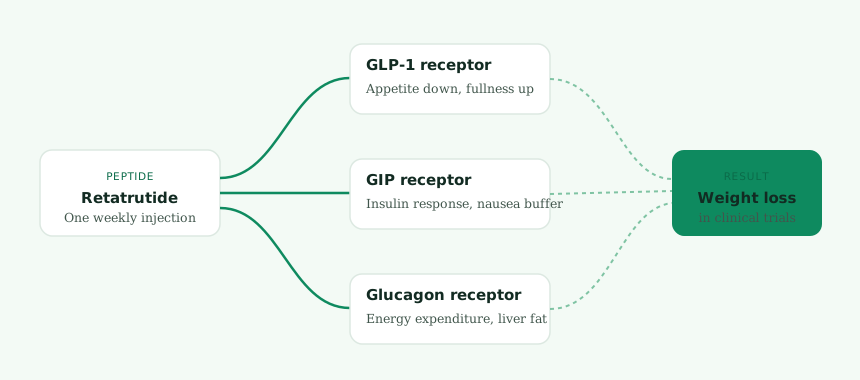
The most discussed retatrutide advantages center on significant weight reduction, reduced appetite, and preliminary signs of broader metabolic enhancements. Retatrutide is an experimental triple-agonist peptide that has attracted attention in mid-stage clinical trials, but it is crucial to state upfront: it is not FDA-approved, it is only accessible as a compounded, provider-monitored medication, and the outcomes described here are under investigation rather than confirmed for all individuals. This page details the reported and studied advantages, addresses common queries such as whether retatrutide boosts energy, and explains what the evidence currently supports and does not support. For the underlying mechanism, refer to our overview of how it works.
Headline benefit statistics (carefully phrased, from published trial reports):
- In a phase 2 obesity trial, participants on the maximum dose saw average body-weight reductions reported in the mid-20% range over about 48 weeks; individual outcomes differ widely.
- Trial participants frequently reported lower appetite and food cravings, though not consistently across all individuals.
- In study cohorts with type 2 diabetes, enhancements in blood sugar indicators like A1c were documented.
- Exploratory analyses indicated reductions in liver fat, which are still under further investigation.
- All figures are investigational, dose-dependent, and may not reflect the experience of any particular person.
The primary retatrutide benefits under investigation
Retatrutide's benefits stem from its structure. Unlike earlier medications that target one or two gut and metabolic hormone pathways, retatrutide activates three receptors at once (GIP, GLP-1, and glucagon). This triple-agonist design explains why the reported retatrutide peptide benefits from clinical trials have appeared significant, even as confirmatory and long-term data are still being collected.
Significant weight loss
The most notable studied benefit is weight reduction. In clinical trials, average losses at higher doses have been among the larger figures seen for this drug class, which contributes to the high level of interest. However, averages mask a wide variation: some participants lost much more, while others lost significantly less. To understand typical outcomes and timelines in real-world settings, consult our page on average what the trials reported.
Appetite and craving reduction
Many people thinking about this peptide care less about the scale number and more about the daily experience of eating less without constant struggle. In trials, participants often reported reduced appetite and lower food cravings. The glucagon-like and GIP components are thought to affect satiety signaling, potentially making smaller portions feel more satisfying. This is a reported effect, not a guarantee, and it can vary depending on dose and individual.
Why appetite changes matter for treatment adherence
Sustainable weight management generally depends on being able to maintain a calorie deficit without excessive discomfort. When appetite is more manageable, sticking to dietary modifications becomes easier, which may indirectly support the other benefits listed below.
Potential metabolic health benefits of retatrutide
In addition to weight, researchers are investigating whether the health benefits of retatrutide extend to markers that predict long-term cardiometabolic risk. These are active research areas, and none of this should be interpreted as established treatment claims.
| Marker studied | What trials have reported | Status |
|---|---|---|
| Blood sugar / A1c | Enhancements in participants with type 2 diabetes | Being studied |
| Blood pressure | Reductions observed alongside weight loss | Being studied |
| Lipids (cholesterol, triglycerides) | Favorable shifts reported in some groups | Being studied |
| Hepatic (liver) fat / MASH | Significant reductions in liver fat in exploratory analyses | Under active research |
Many of these changes closely follow weight loss itself, so it is often unclear how much is a direct effect of the drug versus a consequence of losing weight. Ongoing trials aim to clarify this.
The glucagon component and energy expenditure
Retatrutide's glucagon activity is one reason it is thought to influence how the body expends energy. Glucagon can boost energy expenditure and assist in mobilizing stored fat, possibly contributing to the weight-loss signal observed in trials. This is a mechanistic rationale under investigation, not a promise of a specific result.
Does retatrutide boost your energy?
This is a frequently asked question, and it warrants a straightforward reply. Retatrutide is not a stimulant. It lacks caffeine or any ingredient meant to make you feel energized or hyper. So if you're asking whether it acts like an energy drink, the answer is no.
What many interpret as elevated energy usually stems from secondary effects: diminished cravings and food fixation, more stable glucose levels, gradual weight loss that eases physical activity, and better metabolic function over time. Some individuals indeed feel improved for these reasons. Conversely, others—especially early in treatment or when the dose is raised—may feel increased fatigue or sluggishness while their system adapts. Nausea and reduced food intake can also drain energy. In short, the impact on energy varies and is highly personal.
If you experience ongoing exhaustion, dizziness, or general malaise, this is not something to ignore. It could indicate a side effect or the need for a dosing adjustment. Be aware of the trade-offs on our the safety picture page and adhere to proper dosage guidance under a medical professional.
Retatrutide benefits for men and women
Many people look up retatrutide benefits for men or retatrutide benefits for women, expecting distinct advantages. Honesty is key here: the primary trials focused on weight loss and metabolic outcomes across broad populations, not on promoting sex-specific benefits. Any insights below are general, speculative, and not evidence that the drug works differently based on sex.
Retatrutide for women: possible relevance
For some women, weight changes associated with conditions like PCOS or the menopausal transition are major issues. Since weight loss and enhanced insulin sensitivity may be pertinent to these scenarios, some clinicians wonder if retatrutide could benefit women in these cases. This remains a clinical area of interest, not an established or approved use, and any such consideration should be discussed with a qualified healthcare provider.
Retatrutide for men: possible relevance
Men often have more visceral (abdominal) fat, which is metabolically active and tied to cardiometabolic risk. Because retatrutide has been examined for significant fat loss, reducing visceral fat is a plausible advantage, though this is again studied at a population level and not specifically promised for men.
The honest takeaway on sex differences
Trials were not designed to support sex-specific claims, so be cautious about 'for men' and 'for women' classifications. Individual biology, starting weight, underlying health conditions, and dosage matter much more than sex alone.
Is retatrutide good for you? Weighing benefits versus risks
Whether retatrutide is beneficial for you is not something a website can determine. The potential advantages of retatrutide are real research areas, but they come with side effects and uncertainties, and the drug is still under investigation.
A reasonable way to evaluate it:
- Define your objectives (weight, metabolic markers, or both) and how much benefit would matter to you.
- Honestly assess the known and possible downsides, not just the positive aspects.
- Go over your medical history and current medications with a licensed doctor.
- Recognize that this is a compounded, provider-only product, not approved by the FDA for general use.
- With professional advice, decide if the balance of pros and cons works for you.
Frequently asked questions
What are the primary benefits of retatrutide?
The main researched advantages include notable weight loss, reduced appetite and cravings, and possible improvements in metabolic indicators like blood sugar, blood pressure, lipids, and liver fat. All are investigational and vary individually.
Are retatrutide's benefits proven in clinical trials?
Encouraging results emerged from mid-stage clinical studies, but retatrutide is still in the investigational phase. Larger, longer trials are in progress, and it is not FDA-approved. Trial averages do not guarantee outcomes for any given person.
Can retatrutide boost your energy levels?
It is not a stimulant. Any perceived energy lift typically comes indirectly from reduced cravings, more stable blood sugar, and easier movement due to weight loss. Conversely, some individuals feel more fatigued, particularly at the start or when the dose is raised.
Are the benefits of retatrutide different for women and men?
Clinical trials were conducted on broad populations, not focusing on sex-specific outcomes. While weight and metabolic improvements might relate to issues like PCOS or menopausal weight gain in women, and visceral fat in men, these are broad considerations rather than substantiated sex-specific claims.
Is retatrutide beneficial for your health?
That depends on your particular health status, objectives, and tolerance for risk, and only a qualified healthcare provider can determine this. The possible advantages need to be balanced against adverse effects and its status as a compounded, investigational product.
How soon do you see benefits from retatrutide?
In studies, changes in appetite often appeared relatively early, while significant weight loss developed over months with gradual dose increases. Individual timelines differ; check our results page for realistic expectations.
The information here is for educational purposes only and is not medical advice. Retatrutide has not been approved by the FDA and is available solely through a licensed provider as a compounded medication. The benefits described are still under investigation, not assured, and should be considered alongside possible risks.