


 Eric J. Topol, MD
 Ania M. Jastreboff, MD, PhD
For those investigating the behavior of this experimental peptide, the retatrutide half-life clarifies most other aspects: the weekly injection schedule, the month-long delay before a dosage adjustment fully takes effect, and the compound's continued detectability after skipping a shot. Phase 1 and phase 2 pharmacokinetic data report an elimination half-life of approximately six days, enabling feasible once-weekly subcutaneous dosing.
Retatrutide is not FDA-approved. As an investigational triple agonist (GIP, GLP-1, and glucagon), it is only available, where offered, as a compounded preparation under a licensed prescriber. The figures below are population averages from studies, not individual predictions.
Retatrutide Half-Life: The Quick Answer
- Reported half-life: approximately 6 days based on published pharmacokinetic data.
- Dosing interval: subcutaneous injection once weekly because the drug is cleared slowly.
- Time to steady state: about 4 to 5 weeks when the dose is stable.
- Near-complete clearance: about 4 to 5 half-lives, or roughly 24 to 30 days after the last injection.
- Status: investigational, not FDA-approved, only under prescriber supervision.
Retatrutide Pharmacokinetics Explained in Simple Terms
Pharmacokinetics examines how the body processes a drug: absorption, distribution, metabolism, and excretion. Half-life is a specific metric within that field, representing the time required for the drug's concentration in the blood to decrease by half.
Imagine 100 units in circulation. After one half-life, about 50 remain; after a second, about 25. The decrease is proportional, not linear: each interval removes half of the remaining amount. Thus, it never reaches absolute zero, but falls below clinically relevant levels.
Absorption following a subcutaneous injection
Published human studies administered retatrutide subcutaneously. The drug gradually enters the bloodstream from the injection site, causing levels to rise over a day or more rather than peaking immediately. Structural modifications slow its breakdown and maintain its presence in circulation, which underlies the reported long half-life. Our summary of what retatrutide is covers the receptor mechanism.
Why a long half-life enables weekly dosing
With a half-life of about six days and an interval of seven days, roughly half of the previous dose remains when the next is given. Concentrations build gradually over several weeks and then stabilize, preventing the pronounced peaks and troughs seen with shorter-acting drugs. A qualified clinician uses this arithmetic when devising the weekly titration schedule.
How Long Does Retatrutide Stay in the Body?
Based on the reported six-day half-life, the table below approximates how much of a final dose remains over time. These are modeled estimates from standard elimination calculations using reported values; individual results may vary.
| Half-lives elapsed | Approximate days | Approx. % cleared | Approx. % remaining |
|---|---|---|---|
| 1 | ~6 days | ~50% | ~50% |
| 2 | ~12 days | ~75% | ~25% |
| 3 | ~18 days | ~88% | ~12% |
| 4 | ~24 days | ~94% | ~6% |
| 5 | ~30 days | ~97% | ~3% |
Interpreting the retatrutide duration table correctly
Pharmacology generally regards four to five half-lives as complete elimination, making retatrutide's clearance roughly three to four weeks after the last injection. This is a laboratory concept, not a clinical guarantee: appetite effects and side effects may subside on their own timeline.
Retatrutide Steady State: Why Dose Adjustments Take Weeks
Steady state is when the weekly drug input equals the amount eliminated. Blood levels stop rising and settle into a weekly pattern. With a reported six-day half-life and weekly injections, steady state is typically reached in about four to five weeks—the same math applied in reverse.
A common misconception is that a dose increase is fully effective immediately. In reality, the effect builds over about a month. Titration schedules maintain a given dose for several weeks to fairly assess both benefit and tolerability, which is why the results timeline progress takes months rather than days.
Conditions That Could Change How Retatrutide Is Exposed in the Body
The half-life reported for a drug is a population mean. Several factors can change how an individual experiences exposure, although specific published information about retatrutide is still scarce.
- Body weight and composition: A larger volume of distribution generally makes a given dose less concentrated in the blood.
- Injection site and depth: In pharmacokinetic studies, absorption through subcutaneous tissue varies with the depth of the injection.
- Kidney and liver function: Kidney or liver problems may influence how peptide drugs are cleared from the body.
- Dose level: Higher doses lead to higher exposure, and the titration schedule affects when a plateau is reached.
- Compounded product variability: Concentration and formulation are not the same across all pharmacies.
- Concurrent medications: Since retatrutide slows stomach emptying, it might change how other oral medications are absorbed if taken at the same time.
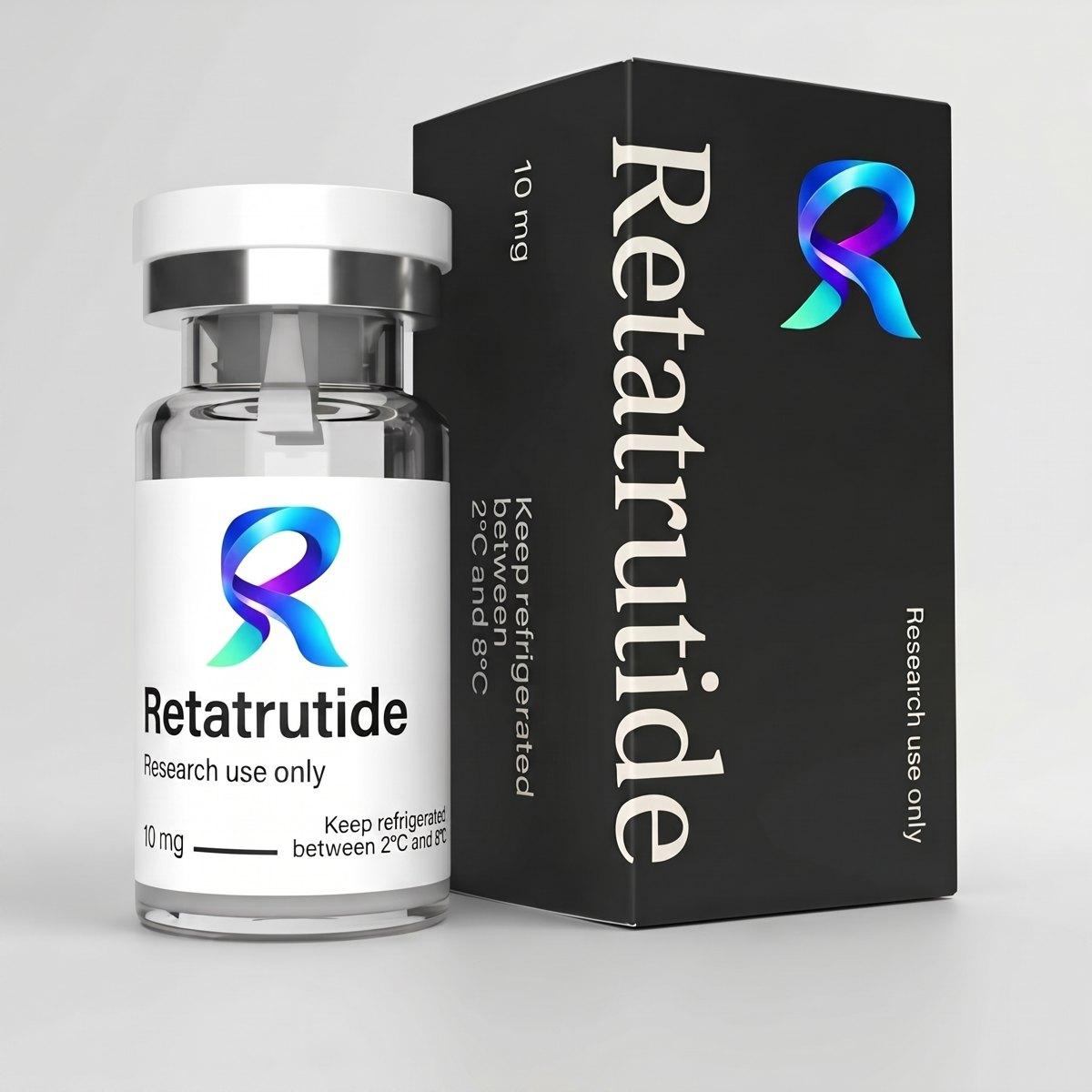
Storage and handling
Storing the peptide incorrectly can break it down, which would change the actual dose you get, no matter what the label says. Always follow the pharmacy's instructions for refrigeration and expiration.
Retatrutide is still being tested in clinical trials. The numbers mentioned here are from early published studies and could be updated as larger trials come out.
Retatrutide Half-Life Pharmacokinetics: FAQ
What is the half-life of retatrutide?
Data from phase 1 and phase 2 trials show that the drug's elimination half-life is about six days, which supports giving it once a week as a subcutaneous injection. Individual results can vary.
How long does retatrutide stay in your system after your last dose?
Using the reported half-life, about 94-97% would be gone after 24-30 days, which is four to five half-lives, and that is usually considered complete elimination.
When does retatrutide reach a steady state?
It takes about four to five weeks if you take the same dose each week. If you increase your dose, the buildup period starts over at the new level.
Is a half-life of 6 days the same as how long the drug's effects last?
No. The level of the drug in your blood and its clinical effects are related but not identical. Changes in appetite and side effects might last longer or fade sooner on a different timeline.
Does a half-life mean I can miss a dose for a week without a problem?
It means that in the published pharmacokinetic data, the drug stays at measurable levels between weekly doses. Clinical trial protocols had their own rules about how late a dose could be taken.
Is retatrutide FDA-approved?
No. It is not approved by regulators and, if available, it is only as a compounded product prescribed by a licensed doctor.