


 Eric J. Topol, MD
 Ania M. Jastreboff, MD, PhD
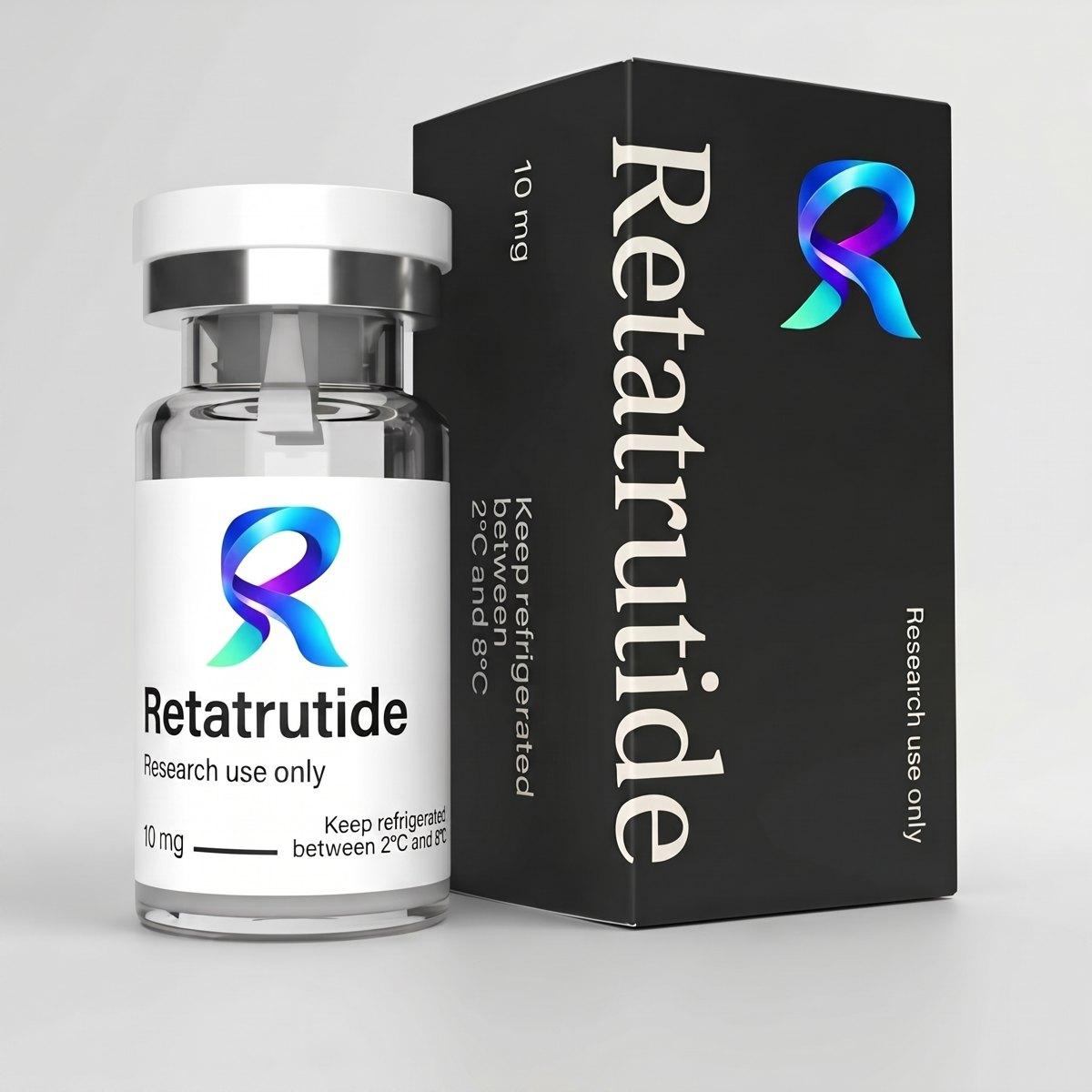
Currently, every retatrutide dose provided to a US patient is compounded, as no FDA-approved branded form of this molecule exists. This fundamental fact influences everything discussed here: the source of the medication, the entity accountable for its quality, and why the regulatory environment for retatrutide compounding remains genuinely uncertain.
Investigational: Retatrutide lacks FDA approval for weight management or any other indication.
Not reviewed: The FDA does not review compounded drugs for safety, efficacy, or quality prior to their dispensing.
Licensed activity: Compounding pharmacies are overseen by state pharmacy boards and, in certain instances, are registered with the FDA.
Contested: Compounding a never-approved molecule is an evolving legal matter, not a settled one.
Compounded retatrutide defined in straightforward terms.
Pharmaceutical compounding involves a licensed pharmacy creating a medication for an individual patient based on a valid prescription. Rather than a mass-produced vial leaving a factory in its final state, the pharmacist blends the active ingredient, diluent, and excipients into a product intended for a specific person.
Compounding is not an unconventional practice; it predates industrial manufacturing and remains standard for pediatric dosing and sterile injectables. What is distinctive here is the active ingredient itself. Retatrutide, a triple agonist still undergoing clinical trials, means that a compounded preparation is not a derivative of an approved product; it is the sole format in which the molecule is available to patients outside of research studies.
Prescription-only, by definition
A compounding pharmacy cannot process an online order without clinical oversight. An evaluation and a prescription linked to a specific patient are mandatory, so the practical starting point is how a telehealth consultation and prescription actually operate, not just adding to a cart.
503A versus 503B: two categories of retatrutide compounding pharmacies.
US law divides compounders into two classes, and this distinction is more consequential than most promotional materials acknowledge.
503A pharmacies
A 503A pharmacy prepares patient-specific compounds against individual prescriptions and is primarily licensed and inspected by its state board of pharmacy. It is not bound by the full federal current good manufacturing practice regulations that apply to drug manufacturers, and it generally cannot produce large batches for office stock or wholesale distribution.
503B outsourcing facilities
A 503B outsourcing facility registers with the FDA, can compound larger quantities without patient-specific prescriptions, and is expected to adhere to current good manufacturing practice standards with FDA inspections. This represents a higher threshold for process control, though registration does not constitute approval of any product it manufactures.
Why this distinction appears in your documentation.
The classification indicates who inspects the facility and what records you can ask for. If a provider cannot identify its pharmacy, that is a telling piece of information.
Registration, licensure, and inspection are not synonymous with approval. No compounder, regardless of category, can make a compounded preparation that is FDA-approved.
Is retatrutide eligible for compounding? The candid regulatory answer.
Compounding itself is legal and regulated. The more challenging question is whether an investigational molecule without an approved reference product is a suitable candidate for compounding, and this question currently lacks a definitive public resolution. Federal law permits compounding from bulk substances under certain conditions, and the exact boundaries of these conditions are the crux of the debate.
What can be accurately stated: this is an unresolved, rapidly changing area. Pharmacies and prescribers make their own judgments on whether and how to proceed, and these decisions vary. Enforcement actions, state board policies, and legal proceedings can all alter the landscape. Anyone asserting that the practice is clearly allowed or clearly forbidden is exaggerating the established public knowledge. Our page on FDA approval status details where the molecule stands in the trial process and what approval would mean.
Compounded retatrutide is not an FDA-approved medicine. The agency has not assessed its safety or efficacy, and it should only be utilized under the supervision of a licensed healthcare provider.
Compounded, approved, and research-use-only denote three distinct categories.
The most frequent online misunderstanding is conflating these three groups. They differ in oversight, accountability, and remedies if an issue arises.
| Aspect | FDA-approved drug | Compounded preparation | Research-use-only peptide |
|---|---|---|---|
| Prescription | Required for Rx products | Required, patient-specific | None; offered without any clinical supervision |
| Oversight | Both FDA and manufacturer quality systems | State licensing board; 503B registration with FDA | Essentially none for human consumption |
| Review before dispensing | Yes, full application review | No regulatory body inspects the preparation | No oversight whatsoever |
| Labelling | Authorized labeling and package leaflet | Pharmacy label, beyond-use date | "Not for human consumption" |
| Recourse | Structured adverse event reporting and recall procedures | Complaints to pharmacy board, prescriber, or state medical board | Little to none |
The third column is not a cheaper alternative to the second. We recommend reading research-use-only vendors and why they sit outside medical care before using price as the sole basis for comparison.
Key quality considerations when asking about compounded retatrutide
Given that no agency directly reviews the product, patients and prescribers must take responsibility for due diligence. Reputable operations will readily address these points.
Six essential inquiries before your first vial
Licensure: which pharmacy prepares it and does it hold a license in your state? State board: is the license current and without disciplinary actions? Sterility: is each batch tested for sterility, and which lab performs it? Potency: is independent verification of potency and purity against USP standards available with a certificate of analysis? Beyond-use dating: what expiry date is assigned, and on what basis was it established? Cold chain: what are the shipping procedures for the vial, and how should a warm delivery be handled?
A note on cost versus quality
Testing, cleanroom facilities, and cold-chain logistics add to costs, and these expenses are reflected in the price. Understanding what it costs and the reasons behind price differences helps you assess whether a low quote indicates efficiency or compromised practices.
Retatrutide compounded with vitamin B12 and additional ingredients
Certain pharmacies provide retatrutide combined with B12 in a single vial. The usual justifications are ease of use, a purported decrease in nausea, or an energy boost linked to cyanocobalamin.
What combining actually changes
Adding a second ingredient introduces more complexity: its stability needs to be verified, it could cause a reaction, and the beyond-use date depends on whichever component expires first. This doesn't strengthen the product. No study indicates that retatrutide mixed with vitamin B12 is more effective or better tolerated than retatrutide on its own.
The practical takeaway
View combining ingredients as a medical judgment made by a licensed professional for a clear reason, not a feature to seek out. If there's no specific explanation for why the additive is included for you, the simpler formulation is the safer choice.
Common queries about compounded retatrutide
Is compounded retatrutide FDA-approved?
No. Retatrutide is still under investigation, and compounded versions of any drug have not received FDA approval or been evaluated for safety, effectiveness, or quality prior to being dispensed.
Are pharmacies that compound retatrutide operating legally?
Compounding pharmacies work lawfully within state licensing and federal regulations, but whether preparing a non-approved investigational compound falls under these rules is uncertain and changing. Opinions vary among pharmacies and healthcare providers.
Can I buy compounded retatrutide online without a prescription?
No. Compounding must be done based on a valid prescription for a specific patient. Products sold without medical oversight are not considered compounded medications, no matter how they are advertised.
How do 503A and 503B pharmacies differ?
A 503A pharmacy compounds medicines for individual patients based on prescriptions and is regulated by state boards. A 503B outsourcing facility is registered with the FDA, can produce in bulk, and must follow current good manufacturing practices.
Is retatrutide compounded with B12 the right choice?
This should be decided by a qualified healthcare provider. Combining ingredients introduces extra formulation and tolerance factors without showing any added benefit, so it needs a specific medical justification.
The information on this page is for general reference only and is not medical advice. Retatrutide is not FDA-approved, its long-term safety is unknown, and any treatment choices should be made with a licensed clinician.